Frank Gehry’s architecture never tried to be polite.
From the beginning, his work resisted the idea that buildings should explain themselves easily. Forms bent, fractured, and collided. Materials behaved in ways architects were told to avoid. What emerged was not a style in the conventional sense, but a sustained refusal to accept architecture as static, settled, or complete.
Gehry’s career unfolded slowly, unevenly, and often against resistance. Long before international recognition arrived, he spent decades experimenting at the margins of accepted practice. That persistence matters as much as any single building.
Early Life and the Long Road to Recognition
Born in 1929 in Toronto and later settling in California, Gehry did not arrive with a ready-made vision.
His early years were shaped by observation rather than doctrine. He absorbed the ordinary landscapes of cities, the improvisation of everyday construction, and the physical reality of materials.
For much of his early career, Gehry worked without acclaim. His projects were modest. His experiments were often dismissed as unfinished or unruly. Rather than refining a marketable signature, he questioned the assumptions of the profession itself.
This period is essential to understanding his work. Gehry’s later buildings did not emerge suddenly. They were the result of decades spent testing ideas that did not yet have institutional support.
Breaking the Rules on Purpose
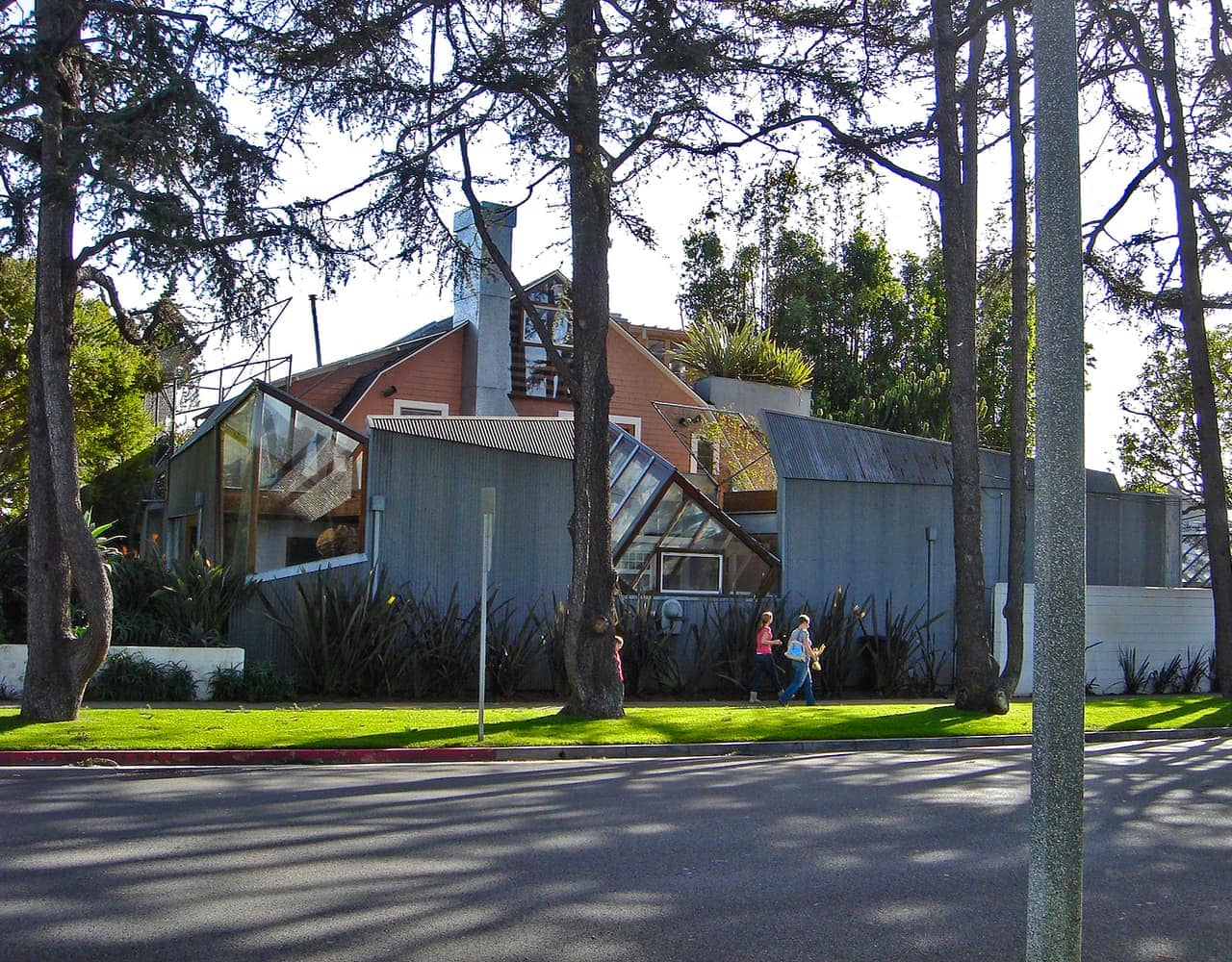
Frank Gehry House, Santa Monica; Photo by IK’s World Trip, via Flickr, CC BY 2.0
Gehry challenged architectural convention by working against its comfort zones.
He used materials considered inappropriate for high architecture. Chain-link fencing, corrugated metal, plywood, and exposed structural elements appeared where polished surfaces were expected. These choices were not provocations for their own sake. They reflected an interest in honesty, improvisation, and the rawness of construction.
His own house in Santa Monica became an early manifesto. Rather than erase the existing structure, Gehry wrapped it, interrupted it, and exposed its layers. The house looked unfinished because it was conceptually open. It showed architecture as a process rather than a product.
This idea stayed with him.
Movement as Structure
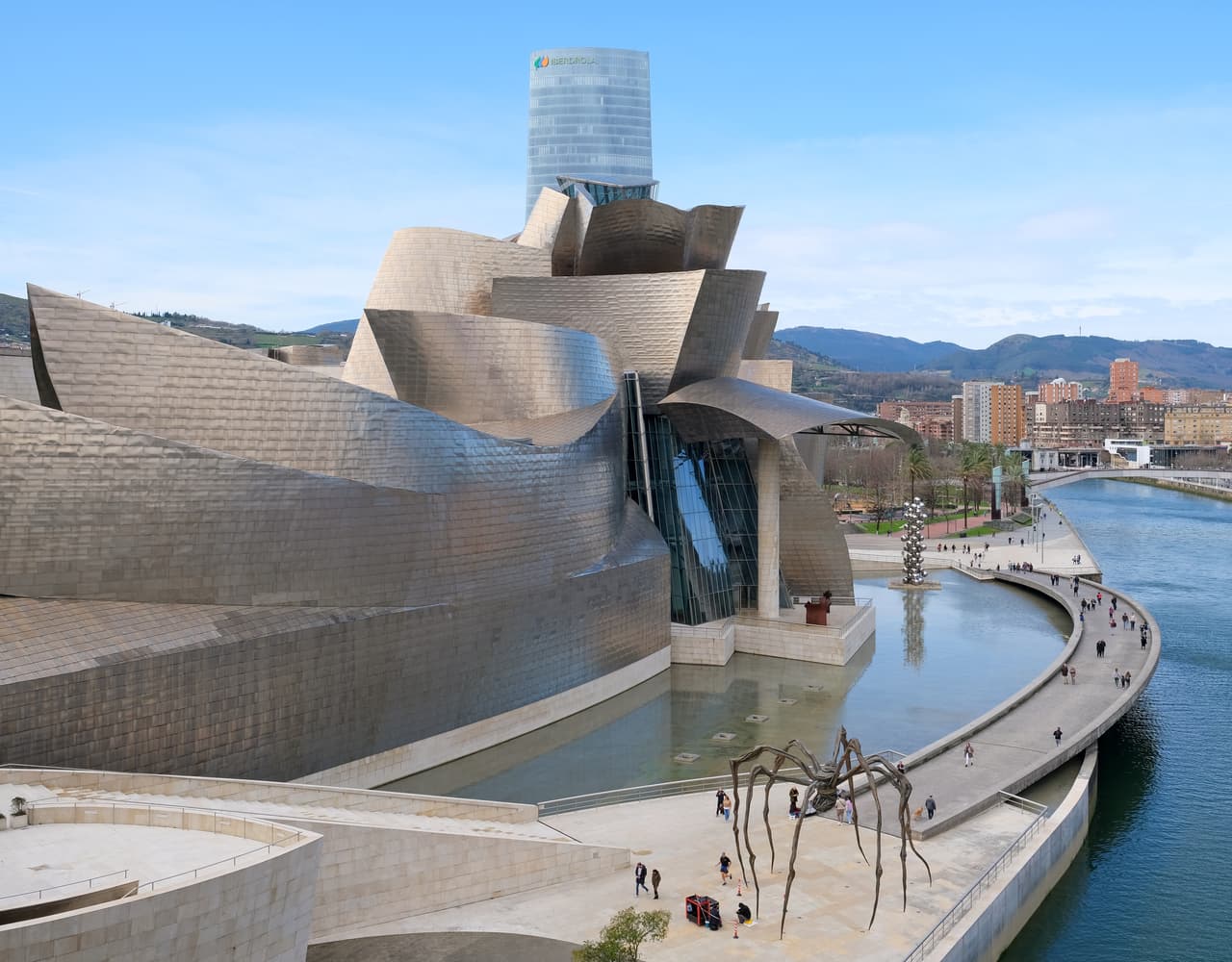
Guggenheim Museum Bilbao. Photo by kallerna, via Wikimedia Commons, CC BY-SA 4.0. Modified from original.
What ultimately distinguished Gehry’s mature work was movement.
Buildings began to behave less like containers and more like gestures. Surfaces twisted. Volumes collided. Forms appeared to shift depending on perspective and light. These were not decorative moves. They redefined how space was experienced.
Museums, concert halls, and civic buildings designed by Gehry often guide visitors through a sequence rather than a destination. Circulation becomes narrative. Structure supports motion rather than symmetry.
This approach made his work immediately recognizable, but also difficult to categorize. Gehry did not fit neatly into modernism, postmodernism, or deconstructivism, even when critics attempted to place him there.
Technology as Enabler, Not Driver
Gehry’s architecture is often associated with digital tools, but technology followed the idea, not the other way around.
As his forms became more complex, traditional drafting methods proved insufficient. Digital modeling allowed irregular geometries to be built with precision. These tools enabled construction, but they did not define the vision.
This distinction matters. Gehry did not pursue complexity because software allowed it. He pursued ideas that required new tools to exist physically.
The result reshaped architectural practice. Digital fabrication and modeling became standard not as stylistic choices, but as practical necessities.
Criticism, Scale, and Responsibility
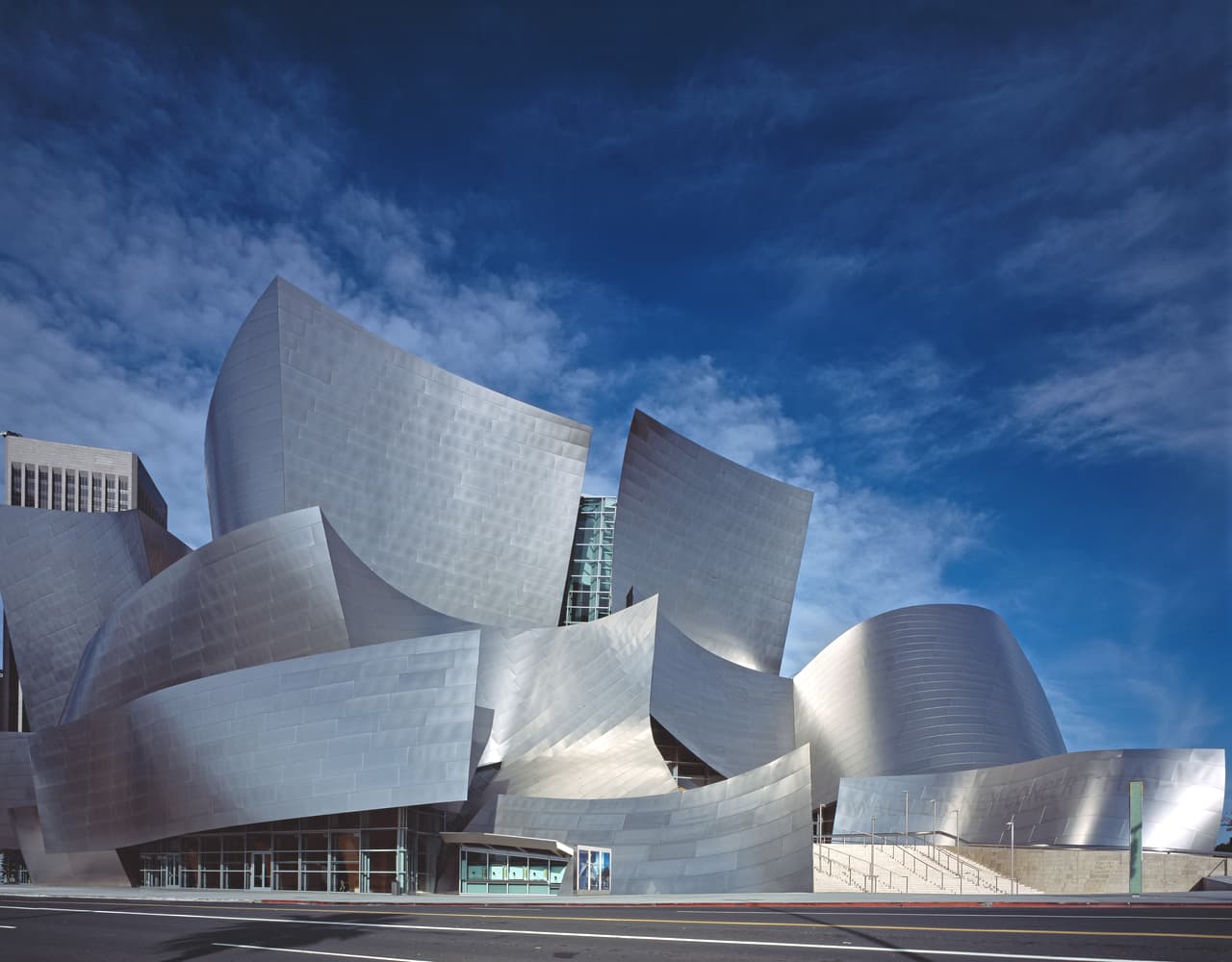
Walt Disney Concert Hall, Los Angeles. Photograph by Carol M. Highsmith, courtesy of the Library of Congress. Public domain.
With recognition came criticism.
Some viewed Gehry’s buildings as extravagant or disconnected from their surroundings. Others questioned cost, maintenance, and long-term usability. These critiques were not without merit.
Gehry’s work demands attention. It rarely disappears into context. That visibility carries responsibility. When successful, the architecture becomes a cultural anchor. When it fails, the consequences are public.
What distinguishes Gehry is not the absence of criticism, but his willingness to accept it as part of risk.
Influence Beyond Style
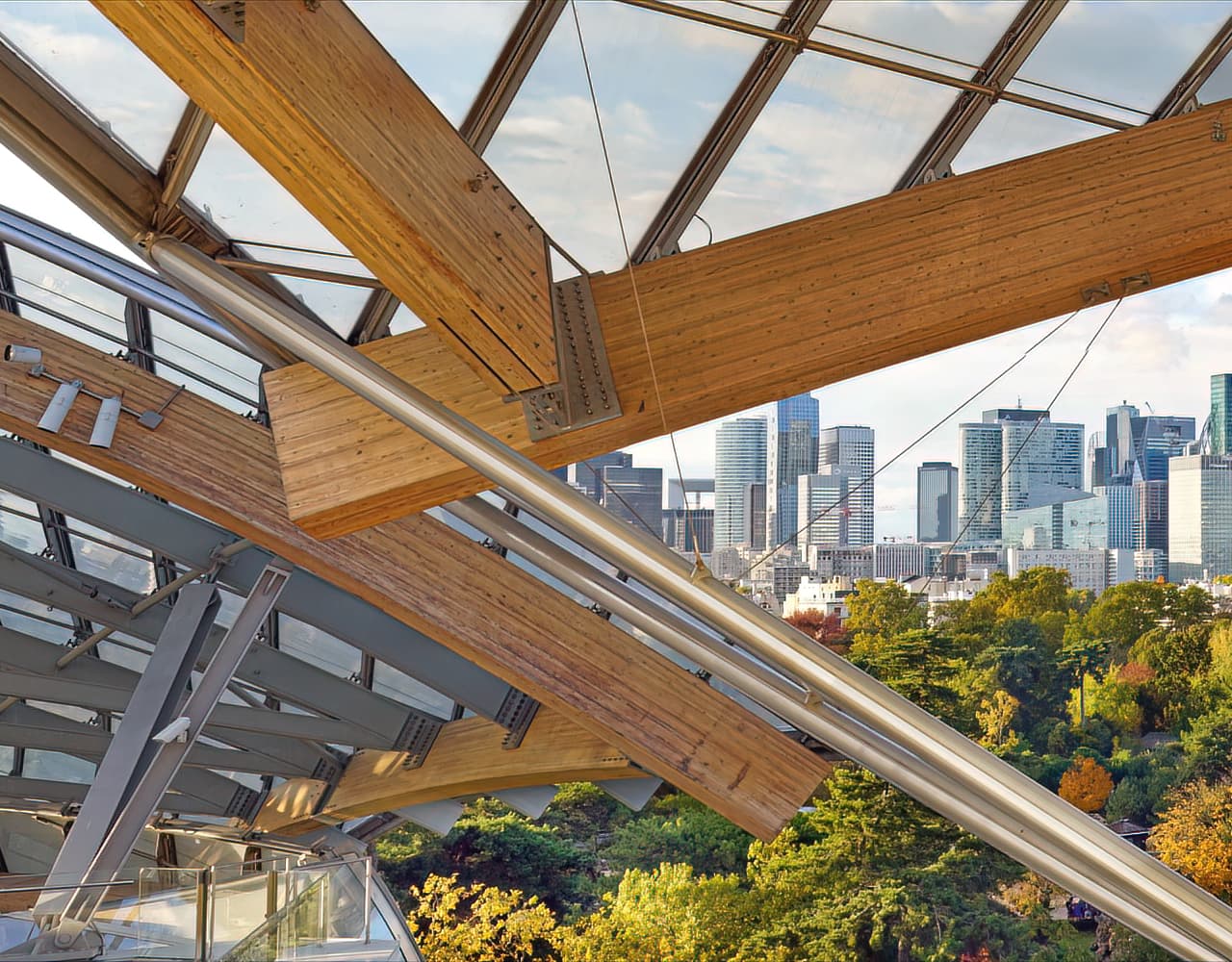
View toward La Défense and the Bois de Boulogne from the terraces of the Fondation Louis Vuitton in Paris, designed by Frank Gehry. Photo by Jean-Pierre Dalbéra, via Wikimedia Commons, CC BY 2.0. Modified from original.
Gehry’s influence extends beyond formal imitation.
Few architects successfully replicate his language without reducing it to surface. His real impact lies elsewhere: in permission.
He demonstrated that architecture could remain experimental at scale. That risk did not have to vanish with success. That buildings could express uncertainty, tension, and motion without apology.
Generations of architects learned that innovation does not require immediate approval. It requires time, persistence, and tolerance for misunderstanding.
Architecture as Ongoing Question
Frank Gehry’s life and work resist neat summary.
He did not offer solutions. He posed questions in physical form. His buildings asked how architecture might move, fracture, and adapt without losing purpose.
That approach left a permanent mark on the discipline.
Gehry’s legacy is not a style to repeat, but a stance to consider: architecture as an ongoing inquiry rather than a finished answer.
Continue Exploring Architecture, Art, and Design
Art+Media+Design is an editorial journal examining how creative figures reshape visual culture through risk, experimentation, and persistence.
If this reflection resonates, explore the journal further. Each article traces how ideas evolve across disciplines, materials, and time.
Image credits:
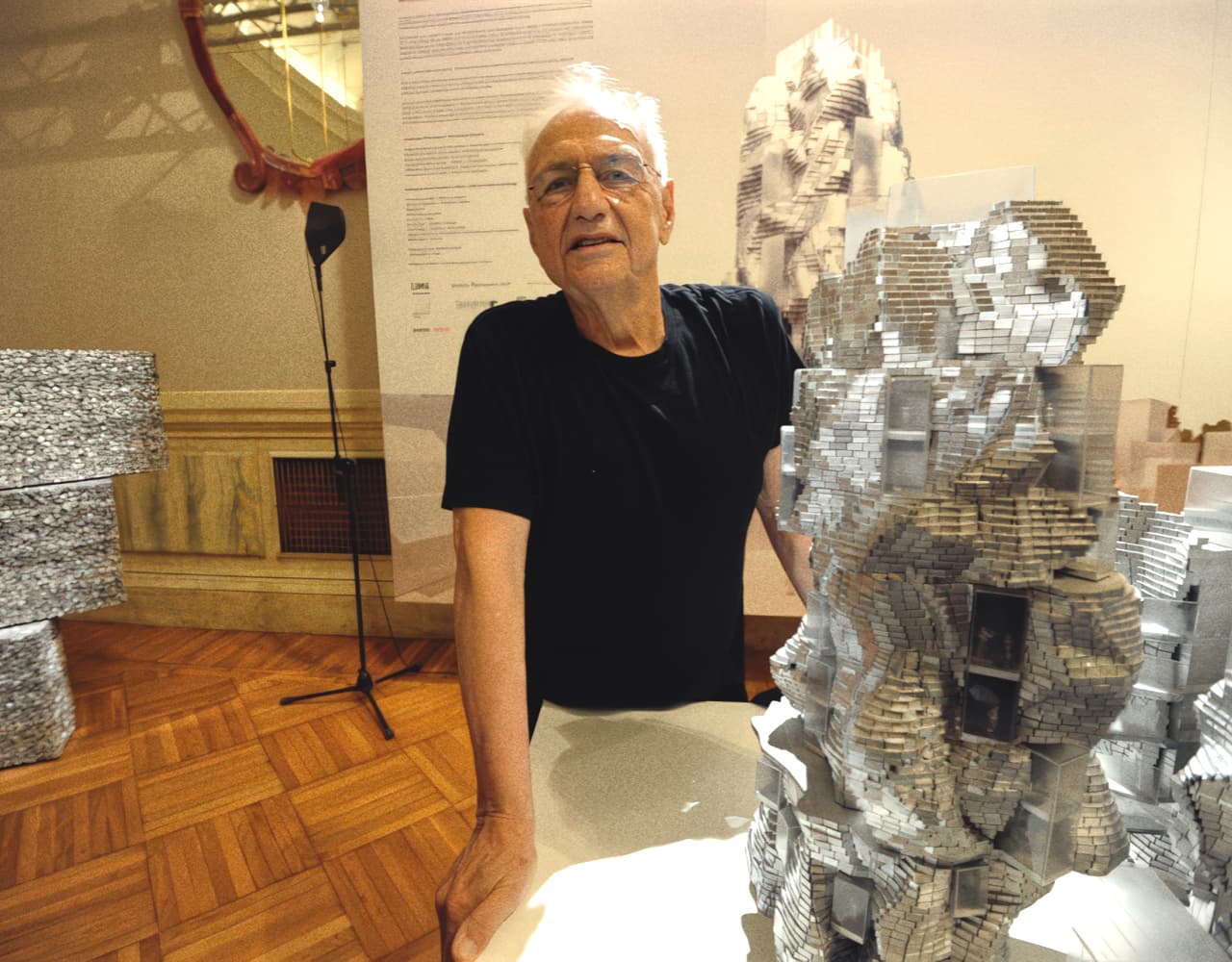
- Featured image: Frank Gehry – Parc des Ateliers. Photo by Forgemind ArchiMedia, via Flickr, CC BY 2.0
- Frank Gehry House, Santa Monica. Photo by IK’s World Trip, via Flickr, CC BY 2.0
- Guggenheim Museum Bilbao. Photo by kallerna, via Wikimedia Commons, CC BY-SA 4.0.
- Walt Disney Concert Hall, Los Angeles. Photograph by Carol M. Highsmith, courtesy of the Library of Congress. Public domain
- Fondation Louis Vuitton, Paris. Photo by Jean-Pierre Dalbéra, via Wikimedia Commons, CC BY 2.0. Modified from original.